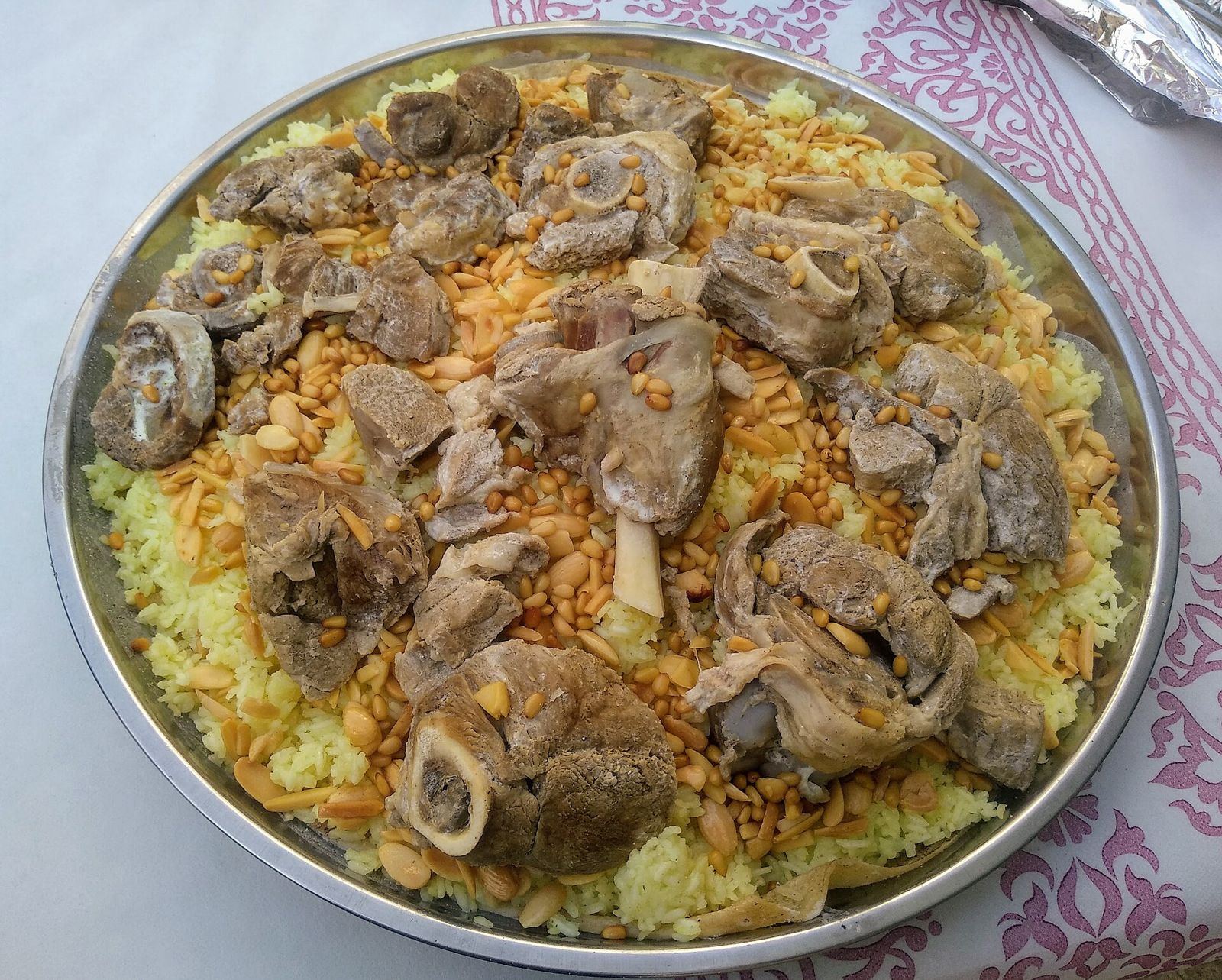
Mansaf, Jordan's national dish

Photo: Fjmustak · CC BY-SA 4.0 · Wikimedia Commons

Cuisine, Culture & Heritage Experiences

Culinary, Culture & Experiences

Taste and live Jordan: mansaf, zarb, and kunafa, cooking workshops with local families, dabke folk dance, colored sand art, handicrafts — plus the local etiquette of hospitality.

Jordanian Dishes

🥘

Mansaf — the national dish

📍 All over Jordan — traditional restaurants and family feasts

Lamb cooked in jameed (dried fermented yogurt), served over rice and shrak bread with pine nuts. Traditionally eaten standing, with the right hand, from a shared platter.

  • 💡 Ask for an individual plate if you're dining alone — most restaurants offer it
  • 💡 Usually served for lunch, not dinner
🔥

Bedouin zarb

📍 Wadi Rum and desert camps

Meat and vegetables slow-cooked for hours in an underground sand oven, then unearthed in front of guests — a genuine spectacle. Part of the dinner at most Wadi Rum camps.

  • 💡 Usually served between 7 and 8 pm — don't be late
🍚

Maqluba and freekeh

📍 Local restaurants and homes

Maqluba is a rice dish with chicken or meat, eggplant and cauliflower, flipped upside-down onto the serving plate; freekeh is smoked green wheat with a distinctive flavor.

🥙

Falafel, hummus and fatteh

📍 Downtown Amman (Hashem, Abu Jbara, Al Hajj Mahmoud)

A cheap, delicious classic Jordanian breakfast: fresh falafel, hummus with olive oil, hummus fatteh, and mint tea.

  • 💡 Perfect breakfast before a downtown walking tour
🍮

Nabulsi kunafa

📍 Habiba — downtown and other branches

Warm cheese under a crunchy pastry layer soaked in syrup, sold by weight and eaten standing — a daily treat for Jordanians.

  • 💡 Ask for it fresh from a newly baked tray
☕

Plain coffee and sage tea

📍 Everywhere — Jordanian hospitality

Cardamom-spiced Arabic coffee is served in a small cup; a slight shake of the cup signals you've had enough. Tea is often very sweet — ask for it 'less sugar'.

Restaurants & Food Experiences

📜

Al Qantarah restaurant — menu in 10 languages

📍 Downtown Amman, near the Roman Theatre

A heritage restaurant serving authentic Jordanian cuisine with a multilingual menu that makes ordering easy for Asian and European visitors.

  • 💡 Book ahead in the evening during peak season
  • 💡 Ask about the local dish of the day
👩‍🍳

Jordanian cooking workshops

📍 Amman, Madaba, Umm Qais, Petra

3–4 hour workshops including shopping at a local market and preparing mansaf or maqluba with a Jordanian family, then sharing the meal together.

  • 💡 Book at least a day ahead
  • 💡 Mention any food allergies in advance
🫒

Food markets, olive oil and za'atar

📍 Al Bukharia souk and vegetable market — downtown

Jordanian olive oil, za'atar, jameed, dates and spices — the best food gifts, and cheaper than airport shops.

  • 💡 Ask for tight, travel-safe packaging

Folklore & Arts

💃

Dabke and Jordanian folklore

📍 Weddings, festivals, Wadi Rum camps

A group dance performed in a line with linked hands, to the rhythm of the yarghoul flute and drum. Performances for visitors are held at camps and some heritage restaurants.

  • 💡 Jerash Festival (July–August) is the best chance to see national troupes
🏺

Colored sand art

📍 Petra, Wadi Rum, downtown Amman

Artisans layer Petra's colored sand inside bottles to form desert landscapes and even your name, in just minutes.

  • 💡 Ask them to write your name inside the bottle
  • 💡 Wrap it well in your carry-on
🧵

Handicrafts and embroidery

📍 Local cooperatives — Bani Hamida, Iraq al-Amir, Salt

Handwoven rugs, Jordanian embroidery, Madaba mosaics and Dead Sea soap — buying directly supports producing families.

  • 💡 Ask about the craft's certificate of origin
🕌

Hospitality etiquette and customs

📍 All over Jordan

Welcoming guests with coffee and dates is part of Jordanian generosity, and outright refusing hospitality can be seen as impolite. Modest dress is advisable outside resorts.

  • 💡 Ask permission before photographing people
  • 💡 Friday is the official day off — some shops open in the afternoon

Traveler Etiquette & Behavior

👗

Appropriate dress

📍 Cities, villages and religious sites

Dress in Amman is diverse and relaxed, but in villages and religious sites it's best to cover shoulders and knees. Mosques require a headscarf for women.

  • 💡 Carry a light scarf in your bag
  • 💡 Save swimwear for beaches and resorts only
📷

Photographing respectfully

📍 Markets and villages

Ask permission before photographing people, especially women and children. Photography is banned at some government and military facilities.

  • 💡 A smile and a short question usually open the door
  • 💡 Don't photograph inside airports or at border crossings
💵

Tipping

📍 Restaurants, hotels and tours

Customary but not mandatory: around 10% at restaurants if a service charge isn't already added, plus a small amount for porters, drivers and guides.

  • 💡 Keep small bills handy
  • 💡 Check the bill for a 'service charge' line
🌙

Ramadan and holidays

📍 All over Jordan

During Ramadan, working hours shift and fewer restaurants are open in the daytime, while evenings come alive. Friday is the main day off and Sunday is a workday.

  • 💡 Avoid eating or drinking in public during the day out of respect for those fasting
  • 💡 Book Ramadan iftar dinners in advance
🗣️

Useful Arabic phrases

📍 Everywhere

'Marhaba' (hello), 'shukran' (thank you), 'kam al-si'r?' (how much?), 'tafaddal' (please/go ahead), 'ya'tik al-'afiyeh' (appreciation for effort) — using them instantly warms people up.

  • 💡 English is understood in tourist cities
  • 💡 A simple attempt matters more than perfect pronunciation

Shopping & Gifts

🫒

Olive oil, za'atar and sumac

📍 Downtown souks and municipal markets

High-quality, lightweight local products that make excellent gifts. Ask for sealed containers suitable for air travel.

  • 💡 Liquids go in checked luggage
  • 💡 Ask about the olive oil's pressing date
🧼

Dead Sea products

📍 Resorts, malls and markets

Salts, mud and creams extracted from the Dead Sea. Buy from trusted stores or well-known brands to ensure authenticity.

  • 💡 Compare prices between resorts and markets
  • 💡 Check the expiration date
🧵

Women's handicrafts

📍 Bani Hamida, Irbid, Wadi Musa, cooperative associations

Handwoven rugs, embroidery, soap and pottery produced by women's cooperatives; buying directly supports families.

  • 💡 Ask about the piece's story and its maker
  • 💡 Gentle bargaining is acceptable at markets

Information is indicative; prices and schedules may change. Photos, field-verified details and more languages are coming soon.