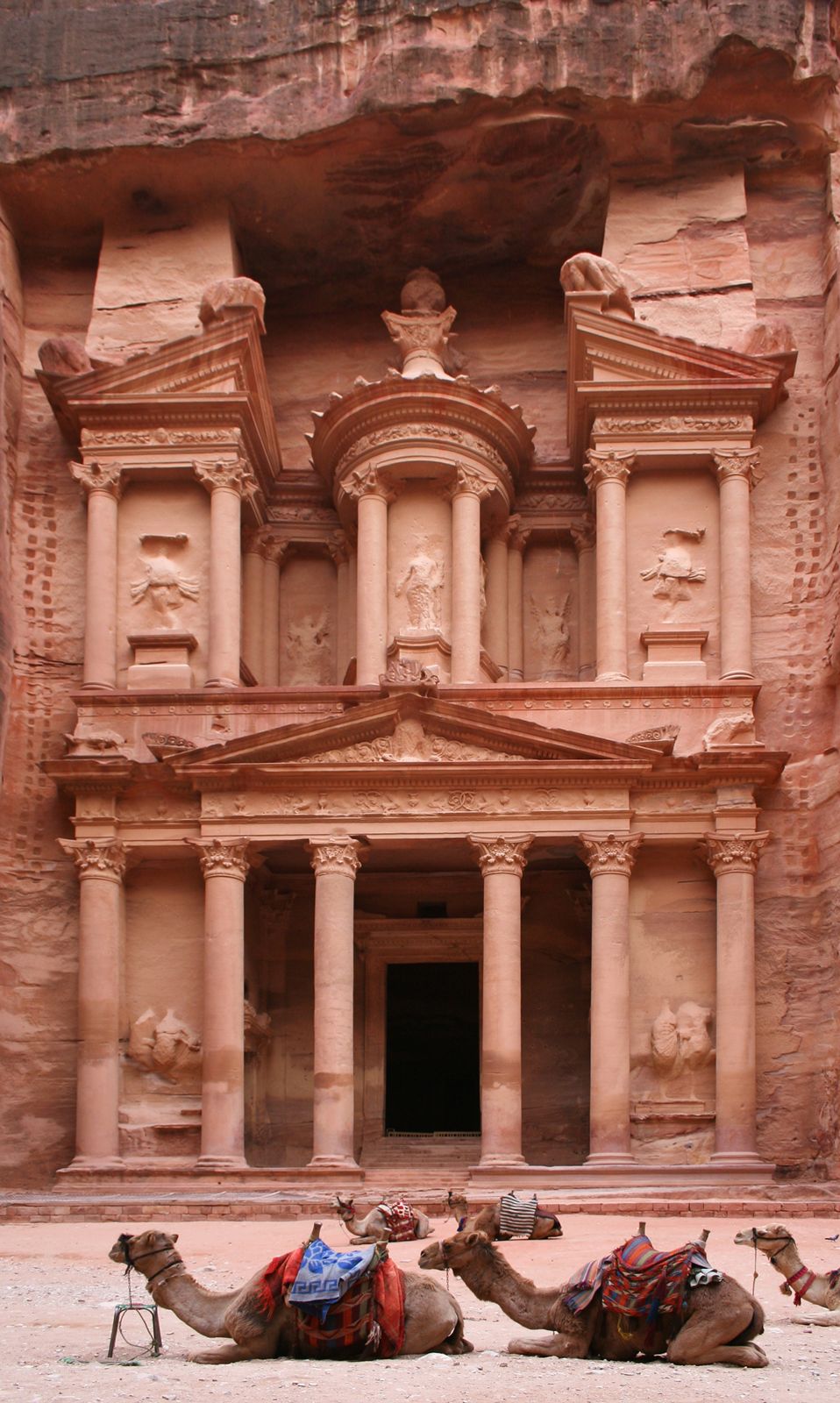
Al-Khazneh (The Treasury), Petra

Photo: Graham Racher / MrPanyGoff · CC BY-SA 2.0 · Wikimedia Commons

Historical Sites & Museums

Historical Sites & Museums

From rose-red Petra to Roman Jerash, the northern castles, Amman's museums and the desert palaces — a practical guide to sites, tickets and the best times to visit.

Petra

🌹

The Rose City — Main Site

📍 Wadi Musa — Visitor Center gate

The walk begins at the Visitor Center through the Siq (about 1.2km) to the Treasury, then the Colonnaded Street and the Nabataean Theatre. Allow 4–6 hours for a comfortable visit.

  • 💡 Start early (6:00–7:00 AM) to avoid heat and crowds
  • 💡 Bring water, a hat and comfortable walking shoes
⛰️

The Monastery (Ad-Deir)

📍 Top of the mountain — about 800 steps from the heart of Petra

The largest carved façade in Petra. The climb takes 45–60 minutes on foot; mules are available for a pre-agreed fare.

  • 💡 Agree on the price before riding
  • 💡 The cafés at the top are great for a break
🕯️

Petra by Night

📍 From the Visitor Center — specific evenings each week

A candlelit walk to the Treasury with Bedouin music and tea. A separate ticket not included in Jordan Pass.

  • 💡 Book same-day at the ticket office
  • 💡 Use low-light camera settings without flash
🎟️

Tickets and Jordan Pass

📍 Visitor Center ticket office / Jordan Pass website

Jordan Pass includes Petra entry and about 40 sites, and waives the entry visa fee if you stay a minimum of 2 nights (3 days) in Jordan. Buy it before arriving in Jordan.

  • 💡 Carry your passport — required at the gate
  • 💡 The multi-day ticket is cheaper for repeat visits
🛺

Electric carts and horses

📍 From the gate to the Treasury

Electric golf carts transport elderly and disabled visitors through the Siq for an extra fee, alongside horses and traditional carriages.

  • 💡 Agree on the price clearly or in writing before starting
  • 💡 The first stretch by horse is sometimes included in the ticket

Northern Sites

🏟️

Roman Jerash

📍 Jerash — about 50km north of Amman

One of the best-preserved Roman cities in the world: Hadrian's Arch, the Oval Plaza, the Colonnaded Street and the South Theatre. Allow 2–3 hours.

  • 💡 Included in Jordan Pass
  • 💡 Roman chariot-race shows run in certain seasons
🏯

Ajloun Castle (Qalat ar-Rabad)

📍 Ajloun — about 76km northwest of Amman

An Ayyubid castle built by Izz ad-Din Usama in 1184 CE under Saladin's orders, with panoramic views over the Jordan Valley.

  • 💡 Combine it with Ajloun Forest Reserve in one day
🌄

Umm Qais (Gadara)

📍 North of Irbid — views over the Sea of Galilee and the Golan Heights

A Greco-Roman city built of black basalt stone, with a theatre, mausoleum and colonnaded street, and the finest sunset in northern Jordan.

  • 💡 Go an hour before sunset
  • 💡 It's cooler than Amman — bring a jacket

Amman & Museums

🏛️

Citadel Hill and Roman Theatre

📍 Downtown Amman

Citadel Hill houses the Temple of Hercules, the Umayyad Palace and the Archaeological Museum, while the Roman Theatre seats about 6,000 spectators and hosts the Folklore and Costume museums.

  • 💡 The two sites are a 15-minute walk apart
  • 💡 Golden-hour light before sunset is ideal for photos
🖼️

The Jordan Museum

📍 Ras al-Ain, Amman

The largest national museum, displaying the Ain Ghazal statues (among the oldest human statues in the world) and a copy of the Dead Sea Copper Scroll.

  • 💡 Usually closed on Tuesdays — check before visiting

Desert Castles & Religious Sites

🏜️

The Umayyad Desert Castles

📍 East of Amman — Qasr Amra, Kharana, Azraq

Qasr Amra is UNESCO-listed for its rare frescoes, and all three castles can be visited in a single day trip.

  • 💡 The road is desert terrain — stock up on fuel and water
⛪

Madaba and Mount Nebo

📍 Madaba — 30km southwest of Amman

St. George's Church holds the Byzantine mosaic map of the Holy Land, while Mount Nebo overlooks the Jordan Valley and Jericho.

  • 💡 Combine it with Baptism Site and the Dead Sea in one route
💦

The Baptism Site (Bethany)

📍 Jordan Valley — near the Dead Sea

The World Heritage-listed site of Jesus Christ's baptism; entry is only via a guided tour with the site's shuttle bus.

  • 💡 Modest dress required
  • 💡 Bring insect repellent in summer

Central & Southern Sites

🗺️

Madaba and the Map Church

📍 Madaba — about 30km south of Amman

The City of Mosaics, home to the 6th-century Byzantine mosaic map of the Holy Land inside St. George's Church, plus lively mosaic workshops.

  • 💡 Usually combined with Mount Nebo in half a day
  • 💡 The church closes during Sunday morning mass
⛰️

Mount Nebo

📍 10km west of Madaba

The site traditionally associated with Moses's view of the Promised Land, with panoramic views of the Jordan Valley and the Dead Sea, and on clear days Jerusalem and Jericho.

  • 💡 Best photo light is before noon
  • 💡 Winds are strong — bring a light jacket
🏰

Karak Castle

📍 Karak — on the King's Highway

A massive 12th-century Crusader castle with stone passages, tunnels and an archaeological museum inside, overlooking Wadi Araba.

  • 💡 Bring your phone flashlight for the dark tunnels
  • 💡 Floors are uneven — sturdy shoes are essential
🕌

Shobak (Montreal)

📍 On the road between Karak and Petra

An isolated hilltop Crusader castle, less crowded than Karak and great for photography lovers and quiet exploration.

  • 💡 Easier to reach by private car
  • 💡 Few services nearby — bring water
💧

The Baptism Site (Bethany beyond the Jordan)

📍 Jordan Valley near the Dead Sea

A UNESCO-listed site believed to be the location of Jesus Christ's baptism, visited only with a guide on an organized program.

  • 💡 Visits are by the site's shuttle bus at set times
  • 💡 Modest dress required

Planning Your Visit

🕘

General opening hours

📍 Most archaeological sites

Sites usually open from early morning until sunset, with shorter hours in winter and during Ramadan. Last entry is about an hour before closing.

  • 💡 Start early to avoid heat and crowds
  • 💡 Check hours around public holidays
🧑‍🏫

Licensed guides

📍 Gates of major sites

Certified multilingual guides are available at the gates at posted per-site rates, adding historical context that's hard to get exploring alone.

  • 💡 Ask to see their official ID card
  • 💡 Agree on the price and duration before starting
🎒

What to bring

📍 All open-air sites

A hat, sunscreen, plenty of water and closed walking shoes. Most sites are fully exposed and the distances are longer than they look on a map.

  • 💡 1.5L of water per person in summer
  • 💡 Small change for restrooms and kiosks

Information is indicative; prices and schedules may change. Photos, field-verified details and more languages are coming soon.